Emergencies happen. But when you’re shopping for an emerald—whether for an Natural Emerald Cut Engagement Rings Gold, a birthday gift, or a collector’s piece—how do you separate the extraordinary from the merely pretty? The answer lies in understanding the emerald 4C: the same grading system used by gemologists worldwide, adapted specifically for this verdant treasure.
Unlike diamonds, emeralds are graded by their own unique standards. A deep, saturated green from Colombia with natural garden-like inclusions tells a very different story than a paler stone from Zambia with no character whatsoever. In this guide, we’ll walk you through every dimension of how to evaluate emerald quality so you can shop with complete confidence.
What Are the Emerald 4C?
Die emerald 4C refers to Color, Clarity, Cut, and Carat weight—the four universal pillars of gemstone quality. While the GIA originally developed these criteria for diamonds, they’ve become the standard framework for evaluating all colored gemstones, including emeralds. However, emerald grading is more nuanced than diamond grading because inclusions and treatments are an expected part of the emerald story.
By the end of this guide, you’ll understand exactly what gemologists look for, why some emeralds cost ten times more than others, and how to prioritize the 4C when shopping on a budget.
The First C: Color — The Heart of Every Emerald
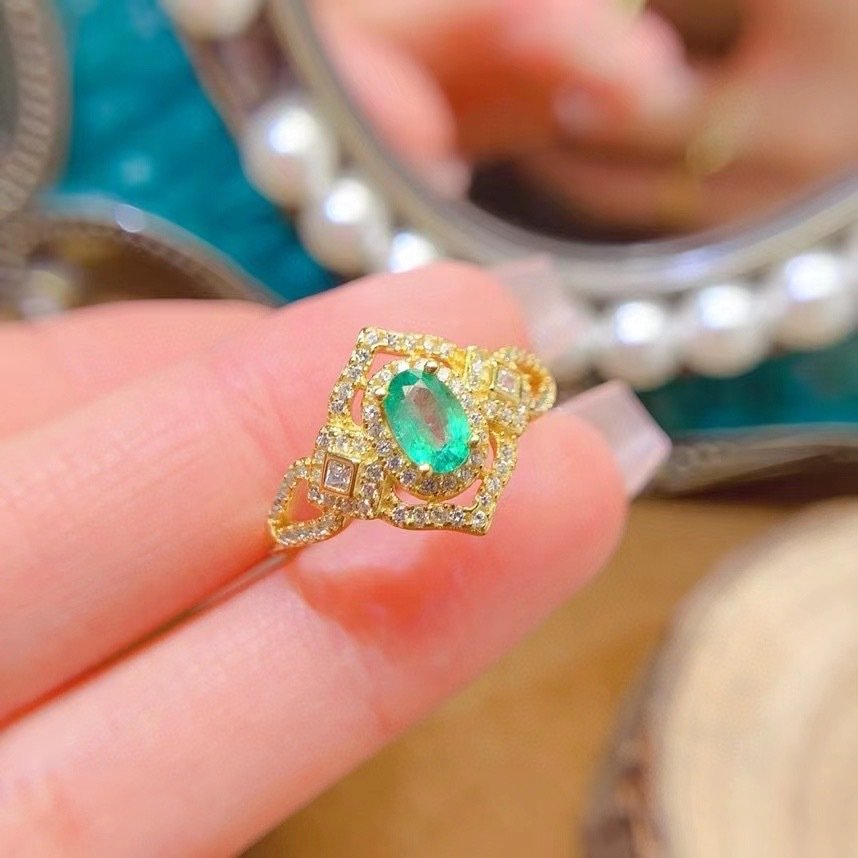
Color is the single most important factor in determining an emerald’s value. More than clarity, more than Gold Natural Emerald Ring—the right green can make an ordinary stone extraordinary.
Muzo Green vs. Vivid Green: The Industry Standard
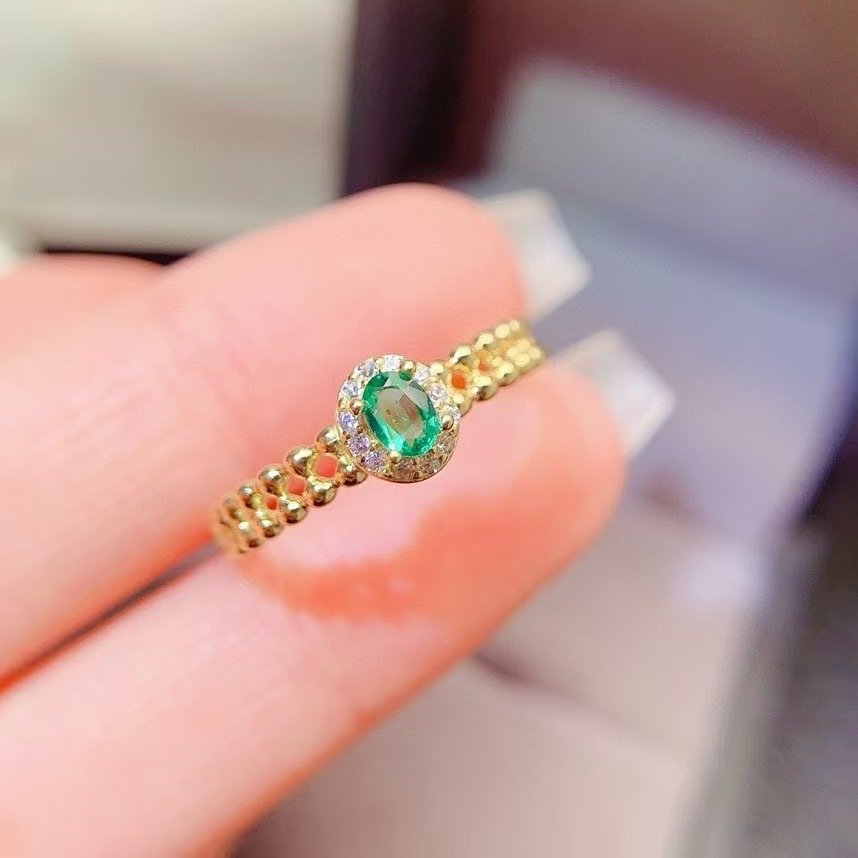
The most sought-after emerald color is what gemologists call “Muzo green” oder “Vivid Green”—a rich, saturated blue-green with no visible yellow or pale undertones. The reference point comes from the legendary Muzo mine in Colombia, which has produced the world’s finest emeralds for over 500 years.
Emerald color is evaluated across three dimensions:
- Hue: The basic color. Fine emeralds are purely green with a slight blue modifier. Any hint of yellow or brown reduces value significantly.
- Tone: How light or dark the green is. The ideal tone is medium to medium-dark—too light looks washed out, too dark appears nearly black.
- Saturation: The intensity or purity of the green. Vivid saturation commands premium prices. Weak or grayish saturation means the stone lacks life.
The GRS (Gem Research Swisslab) and AGL (American Gemological Laboratories) grading systems use terms like Muzo Green, Vivid Green, Strong Vivid Greenund Intense Green. When a lab awards “Muzo Green” status, you’re looking at the top tier of the market.
Primary Green vs. Trade Names
Beyond the technical grades, the emerald trade uses regional names that carry significant weight:
- Muzo Green (Colombia): The holy grail—deep blue-green, velvety, with exceptional saturation. Found only in Colombia’s legendary Muzo, Chivor, and Coscuez mines.
- Trapiche Emerald: A rare Colombian variety with a star-like pattern caused by carbon impurities radiating from the center. A collector’s dream.
- Sandawana Emeralds (Zimbabwe): Known for intense color in small sizes. Even 1-carat stones can achieve “Muzo green” saturation.
- Kagem Emeralds (Zambia): Zambia’s Kagem mine produces deep green emeralds with good saturation, often with better clarity than Colombian stones.
No matter the origin, the best color is always the most saturated pure green with a cool blue modifier—the kind of green that reminds you of a forest in rain.
The Second C: Clarity — Embracing the Garden Within
Here’s where emeralds diverge most dramatically from diamonds. Where a flawless diamond is the ideal, a “flawless” emerald should raise immediate suspicion. Natural inclusions—called jardin (French for “garden”)—are not defects; they are the fingerprint of authenticity.
What Is Jardin in Emeralds?
Jardin refers to the network of inclusions that gives each emerald its unique character. These inclusions can include:
- Three-phase inclusions (a gas bubble, a liquid, and a solid crystal trapped together)—a hallmark of Colombian origin
- Fine parallel tubes creating a cat’s-eye or chatoyancy effect
- Carbonaceous material creating dark spots or wisps
- Fractures reaching the surface, often filled with foreign material
Gemologist Edward J. Gübelin once described inclusions in emeralds as “the life history of the crystal”—each one a clue to where and how the stone formed. Rather than hiding jardin, the best emerald connoisseurs embrace it.
Emerald Clarity Grades Explained
Unlike the IF-VVS-VS-SI-I clarity scale used for diamonds, emeralds use a more descriptive grading system:
- No Inclusions / Loupe Clean: Extremely rare. If an emerald appears completely clean under 10x magnification, it should be treated with extreme suspicion. Always verify with a reputable lab.
- Minor Inclusions: Small inclusions visible under 10x but not to the naked eye. The most common grade for fine emeralds.
- Moderate Inclusions: Inclusions visible to the naked eye but not significantly impacting brilliance. Common in commercial-grade emeralds.
- Prominent Inclusions: Large, obvious inclusions that may affect durability or transparency. Often seen in lower-priced emeralds.
The Treatment Question
The vast majority of emeralds on the market—including those from the finest Colombian mines—have received some form of clarity enhancement. Oil treatment (filling surface-reaching fractures with cedarwood oil or similar substances) is the industry standard and considered an acceptable practice when disclosed. Resin or polymer filling (sometimes called GRL/Opticon treatment) is more controversial and can significantly reduce long-term value.
Always ask for a gemological certificate that explicitly states the type and degree of treatment. A minor oil emerald is far more desirable than a significant polymer fill—even if both appear equally clean to the naked eye.
The Third C: Cut — Shape, Proportions, and Light Return
Die Smaragdschliff wasn’t named after the gemstone by accident. Its stepped facets, clipped corners, and large flat table were designed specifically to protect fragile emeralds from the mechanical stress of cutting and daily wear.
The Classic Emerald Cut: A Masterclass in Design
Die Smaragdschliff features:
- A large rectangular or octagonal table (the flat top surface)
- Stepped, concentric facets arranged in concentric “steps”
- Beveled corners that prevent chipping along the most vulnerable edges
- A deep pavilion (bottom section) that concentrates color
This cut maximizes the display of color while minimizing the risk of fracture. It’s the preferred choice for top-quality emeralds because it best showcases the stone’s hue and saturation.
Other Popular Emerald Cuts
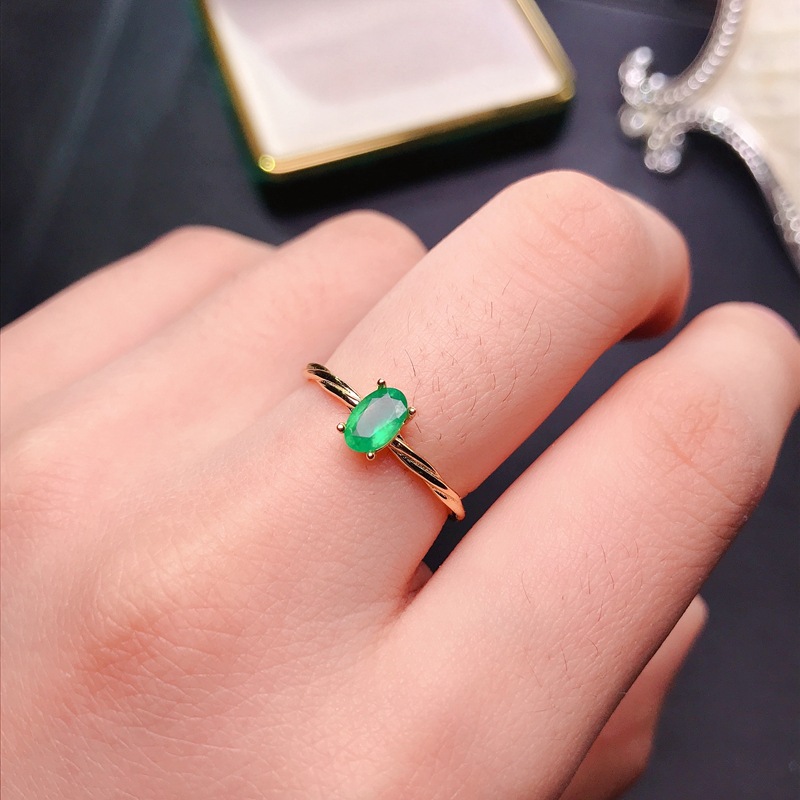
- Oval Cut: Maximizes carat weight and offers excellent brilliance. The elongated shape flatters the finger on __emerald engagement rings__.
- Pear Cut: A teardrop shape that works beautifully as a pendant or in drop earrings.
- Cabochon: A polished, non-faceted dome that is often used for translucent emeralds with prominent inclusions. Popular in antique and art nouveau jewelry.
- Asscher Cut: A square version of the emerald cut, popular in Art Deco designs.
Cut quality is measured by how well the cutter balanced color, brilliance, and weight retention. A poorly cut emerald may appear too dark, too light, or windowed (showing transparency where light passes through rather than reflecting back). The best-cut emeralds display uniform color across the entire face with good brilliance.
The Fourth C: Carat — Size, Weight, and Rarity
Unlike diamonds, where price per carat increases exponentially with size, emerald pricing is more complex. Large, fine-quality emeralds are genuinely rare—but so are small, deeply saturated ones with excellent clarity.
Emerald Carat Weight vs. Dimensions
The relationship between carat weight and physical size varies by cut and proportions:
- A 1-carat round brilliant-cut emerald: approximately 6.5mm in diameter
- A 1-carat emerald cut: approximately 7×5mm
- A 1-carat oval emerald: approximately 8×6mm
- A 3-carat emerald cut: approximately 11×9mm
Emeralds are less dense than diamonds, so a 1-carat emerald will appear larger than a 1-carat diamond of the same shape.
The Rarity Factor: Why Large Emeralds Command Premiums
Fine emeralds above 5 carats are exceptionally rare. The vast majority of emeralds extracted are under 1 carat after cutting. Colombian crystals, in particular, tend to be heavily fractured—yielding smaller finished stones even from relatively large rough.
Here’s the general price multiplier for equivalent quality:
- 1–2 carats: baseline price
- 2–5 carats: approximately 1.5–3× the per-carat price
- 5–10 carats: approximately 3–8× the per-carat price
- 10+ carats: increasingly exponential, depending on quality
A 10-carat Muzo green emerald with minor inclusions can be worth more than a house.
Putting It All Together: How the 4C Interact
The four C’s don’t exist in isolation—they interact in complex ways that determine a stone’s overall beauty and value.
The Color-Clarity Balance
An emerald with exceptional color but heavy inclusions may be less visually appealing than one with slightly lighter color but better clarity. This is why emerald color vs. clarity is the most common trade-off buyers face. For most purposes, prioritize color—it is the first thing the eye sees.
The Cut-Carat Relationship
Sometimes choosing a slightly smaller stone with a better cut delivers more visual impact than a larger stone with a mediocre cut. A well-cut 2-carat emerald can appear as impressive as a poorly cut 3-carat stone—while being more wearable and durable.
Budget Strategy: What to Prioritize
If you’re working with a limited budget, here’s our recommended priority order:
- Color first: Choose the most saturated green you can afford. Even a smaller stone with vivid green will outshine a larger stone with weak color.
- Acceptable clarity: Minor inclusions with oil treatment is industry standard and perfectly acceptable. This is far more affordable than loupe-clean stones.
- Good cut: A quality cut brings out the best in any emerald. Avoid stones with obvious windowing or poor light return.
- Carat last: A smaller, beautifully colored emerald is far superior to a large, lifeless one. Buy the best quality you can afford in the smallest size that works for your setting.
How to Read an Emerald Certificate
A reliable __gemological certificate__ from a respected lab is your most important tool when purchasing an emerald. Look for certificates from:
- GIA (Gemological Institute of America): The gold standard for diamond grading; their colored stone reports are highly respected.
- GRS (Gem Research Swisslab): Specializes in colored stones; their grading of Colombian emeralds is considered definitive.
- AGL (American Gemological Laboratories): Excellent for country-of-origin determination and treatment identification.
- IGL (International Gemological Institute): More accessible pricing; suitable for commercial-grade emeralds.
Your certificate should state: origin, color grade, clarity grade, cut, carat weight, and all treatments. Without this documentation, you’re essentially buying blind.
Shop Smart: Where to Buy Quality Emeralds
Whether you’re looking for a stunning __emerald engagement ring__ or a loose stone for a custom piece, always purchase from a jeweler who provides independent certification, a clear return policy, and detailed treatment disclosure. At EmergentsRing.com, every natural emerald comes with a gemological certificate, and our team of gem experts is standing by to help you navigate the 4C and find the perfect stone for your budget.
Your Emerald Journey Starts Here
Now that you understand the emerald 4C system, you’re equipped to evaluate emeralds with the confidence of a trained gemologist. Remember: the most important C is Color—the right green makes everything else secondary. Clarity is a feature to be appreciated, not feared. And a well-cut emerald in any size can take your breath away.
Browse our curated collection of __natural emerald engagement rings__, or __contact our gem experts__ for personalized guidance on choosing the perfect emerald for your needs. With the right knowledge, finding your dream emerald is closer than you think.
 English
 French
 German
 Italian
 Spanish
 Arabic
 Japanese
 Portuguese
 Korean
 Dutch
Dutch